


Opportunity is said to be at the heart of development and unlocking the potential within individuals and their communities to help shape a better future for all. This is why the African Union's Pavilion is located within the Opportunity District.

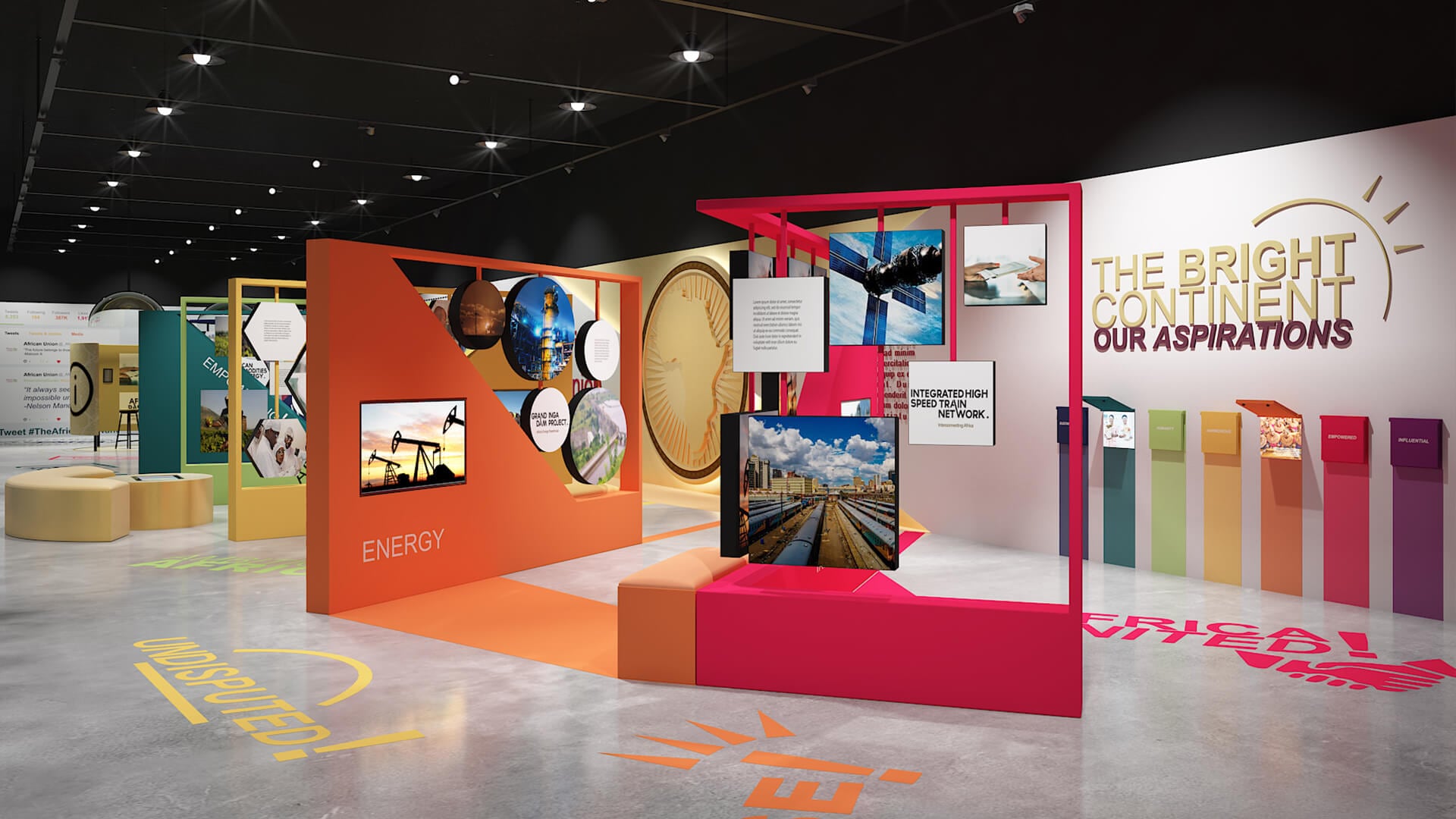
The AU Pavillion will take you on a journey from the time our Pan-African organisation was formed, showcase  Africa’s achievements and highlight pathways  for investment as underlined in the Africa's developmental blueprint - The AU Agenda 2063 Aspirations.

To enhance the visit experience in our pavillion, we have used  video, audio visuals, pictures and interactive screens to capture the essence and progress of the continent.

,

Zone 1 - Our history -Founding Fathers

For the longest time the narrative has been told from the colonial perspective. Experience it first hand as it told by those who are the custodians of the vision of Africa and making it work for its present and future generations through telling the story of inception to rebirth. 

A continent rich in its ethnic identity and diversity tells the world of where it is going and why it matters that world stands in awe an experience this first hand.

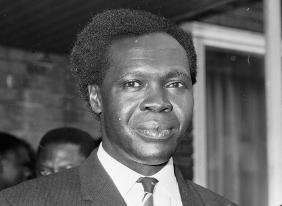
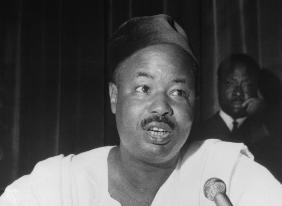
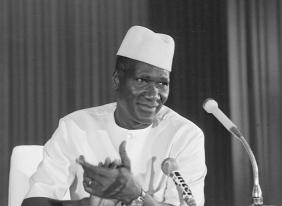
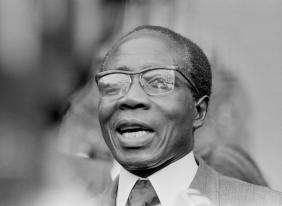
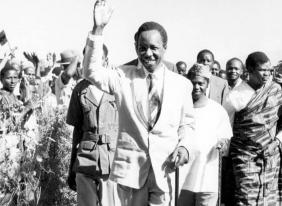
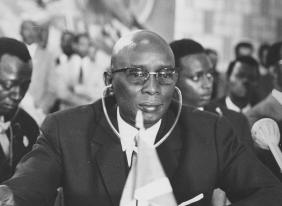
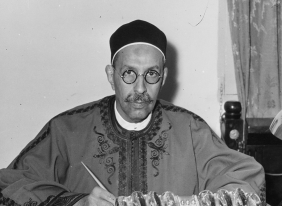
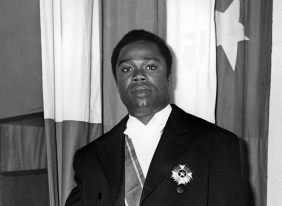
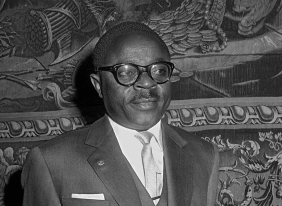
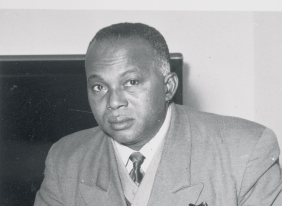
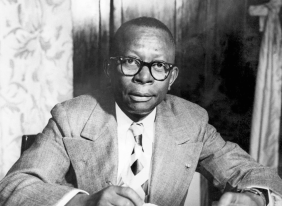
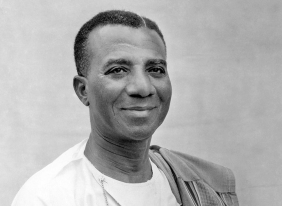
These stories told by our founding fathers are about the how Africans formed a continental body known as the Organization of African Unity (OAU) to fight for liberation and bring the Pan-African ideas to reality. 

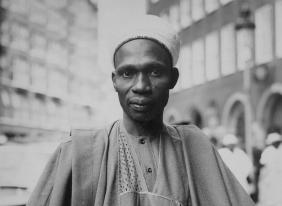
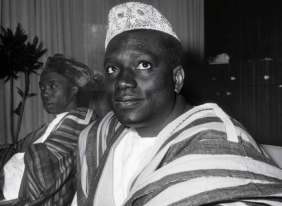
  • Alh. Sir Abubakar Tafewa Balewa , 1st and only Prime Minister of Nigeria
    Alh. Sir Abubakar Tafewa Balewa

    Alh. Sir Abubakar Tafawa Balewa, (December 1912 – 15 January 1966) was a Nigerian politician who was the first and only Prime Minister of Nigeria. He was an important leader in the formation of the Organization of African Unity and creating a cooperative relationship with French speaking African countries. He was also instrumental in negotiations between Moise Tshombe and the Congolese authorities during the Congo Crisis of 1960–1964 

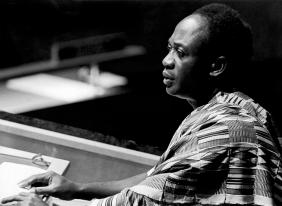
  • Dr. Kwame Nkrumah, 1st President of Ghana
    Kwame Nkuruma

    Lorem ipsum dolor sit amet, consectetur adipiscing elit, sed do eiusmod tempor incididunt ut labore et dolore magna aliqua. Ut enim ad minim veniam, quis nostrud exercitation ullamco laboris nisi ut aliquip ex ea commodo consequat. Sed ut perspiciatis unde omnis iste natus error

    Read More

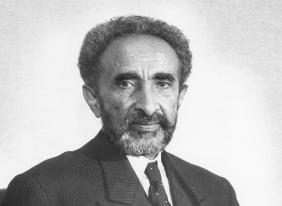
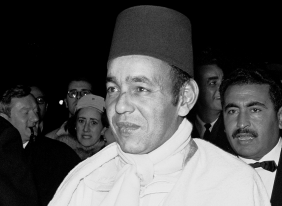
  • His Majesty Haile Selassie, Emperor of Ethiopia
    His Majesty Haile Selassie

    His Majesty Haile Selassie

    His Majesty Haile Selassie I born Ras Tafari Makonnen; 23 July 1892 – 27 August 1975) was the Emperor of Ethiopia from 1930 to 1974. His internationalist views led to Ethiopia becoming a charter member of the United Nations. In 1963, he presided over the formation of the Organization of African Unity, the precursor of the African Union, and served as its first chairman.

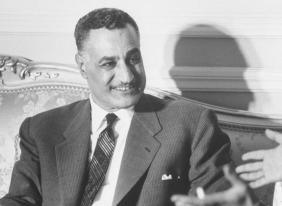
  • General Gamage Abdul Nasser, 2nd President of Egypt
    General Gamage Abdul Nasser

    General Gamage Abdul Nasser

    Gamal Abdel Nasser Hussein (15 January 1918 – 28 September 1970) was an Egyptian politician who served as the second President of Egypt from 1954 until his death in 1970.Nasser remains an iconic figure in the Arab world, particularly for his strides towards social justice and Arab unity, modernization policies and anti-imperialist efforts. His presidency also encouraged and coincided with an Egyptian cultural boom and launched large industrial projects, including the Aswan Dam and Helwan city.

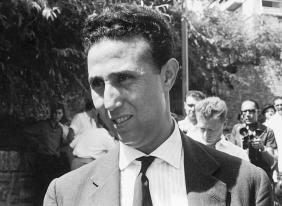
  • H.E Ben Bella, 1st Algeria's 1st President of Algeria
    H.E Ben Bella

    H.E Ben Bella

    Ben Bella, Ahmed 1919–2012, Algerian statesman. After World War II he joined the Algerian nationalist movement and soon became a leader of its underground paramilitary faction. He later (1952–56) served as director of the movement. Imprisoned (1956–62) for his activities, he became Algeria's first premier after independence was declared in 1962 and was elected president in 1963.

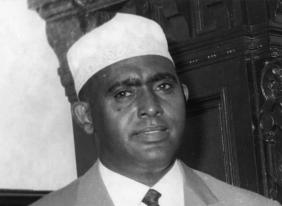
  • H.E Abdirashid Ali Sharmarke, 2nd President of Somali Republic
    H.E Abdirashid Ali Scermarch

    H.E Abdirashid Ali Sharmarke

    His Excellency Abdirashid Ali Sharmarke, was Prime Minister of Somali Republic from July 12, 1960, to June 14, 1964, and President of Somali Republic from July 6, 1967, until his assassination on October 15, 1969.

  • H.E Apollo Milton Obote, Prime Minister of Uganda
    H.E Apollo Milton Obote

    H.E Abdirashid Ali Sharmarke

    Apollo Milton Obote (28 December 1925 – 10 October 2005) was a Ugandan political leader who led Uganda to independence in 1962 from British colonial administration. Following the nation's independence, he served as Prime Minister of Uganda from 1962 to 1966 and President of Uganda from 1966 to 1971, then again from 1980 to 1985. He was overthrown by Idi Amin in 1971 but was re-elected in 1980 a year after Amin's 1979 overthrow.

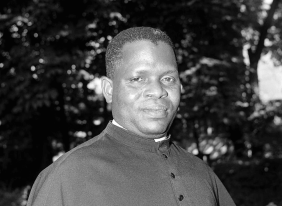
  • H.E Ahmadou Ahidjo, 1st President of Cameroon
    Ahmadou Babatoura Ahidjo (24 August 1924 – 30 November 1989) was a Cameroonian politician who was the first President of Cameroon, holding the office from 1960 until 1982. Ahidjo played a major role in Cameroon's independence from France as well as reuniting the French and English-speaking parts of the country.

    H.E Ahmadou Ahidjo

    Ahmadou Babatoura Ahidjo (24 August 1924 – 30 November 1989) was a Cameroonian politician who was the first President of Cameroon, holding the office from 1960 until 1982. Ahidjo played a major role in Cameroon's independence from France as well as reuniting the French and English-speaking parts of the country.

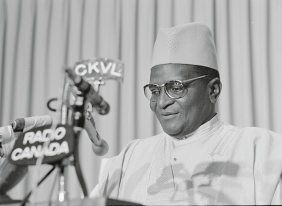
  • H.E Sekou Toure, 1st President of Guinea
    H.E Sekou Toure

    H.E Sekou Toure

    Ahmed Sékou Touré (January 9, 1922 – March 26, 1984) was a Guinean political leader and African statesman who became the first President of Guinea, serving from 1958 until his death in 1984. Touré was among the primary Guinean nationalists involved in gaining independence of the country from France.

  • H.E Leopold Senghor, 1st President of Senegal
    H.E Leopold Senghor

    H.E Leopold Senghor

    Léopold Sédar Senghor (October 1906 – 20 December 2001) was a Senegalese poet, politician and cultural theorist who, for two decades, served as the first president of Senegal (1960–80). Senghor was the first African elected as a member of the Académie française. He is regarded by many as one of the most important African intellectuals of the 20th century.

  • H.E Julius K. Nyerere, President of Tanzania
    H.E Julius K. Nyerere

    H.E Julius K. Nyerere

    Julius Kambarage Nyerere (13 April 1922 – 14 October 1999) was a Tanzanian anti-colonial activist, politician, and political theorist. He governed Tanganyika as Prime Minister from 1961 to 1962 and then as President from 1963 to 1964, after which he led its successor state, Tanzania, as President from 1964 to 1985.

  • King Mwami Mwambutsa IV, King of Burundi
    His Majesty King Mwami Mwambutsa IV

    His Majesty King Mwami Mwambutsa IV

    His Majesty King Mwami Mwambutsa IV Bangiricenge (6 May 1912 – 26 March 1977) was king (mwami) of Burundi who ruled between 1915 and 1966. He succeeded to the throne on the death of his father Mutaga IV Mbikije (reigned 1908–15). On the independence of Burundi in July 1962, Mwambutsa IV became the head of state of Burundi with far reaching political power

,

Our Founding Mothers

African women, under the leadership of activists like Aoua Keita from Mali, Jeanne Martin Cissé from Guinea and Pauline Clark from Ghana, founded the Pan African Women’s Organisation (PAWO) in 1962.

The first continental women’s organization, PAWO, was founded in Dar es Salaam, Tanzania, at a time where majority of African countries were still searching for independence.

One of PAWO’s greatest achievements was the notable contribution towards the struggle for national liberation and national development. Highlighting the important role women played which paved way for the the founding fathers’ meeting in 1963.

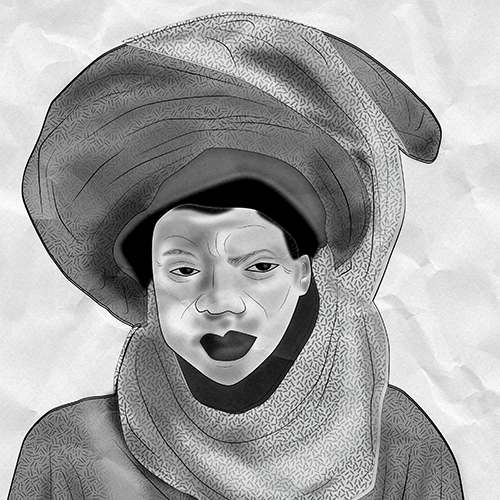
Alimotou Pelewura

Alimotou Pelewura

Nigeria

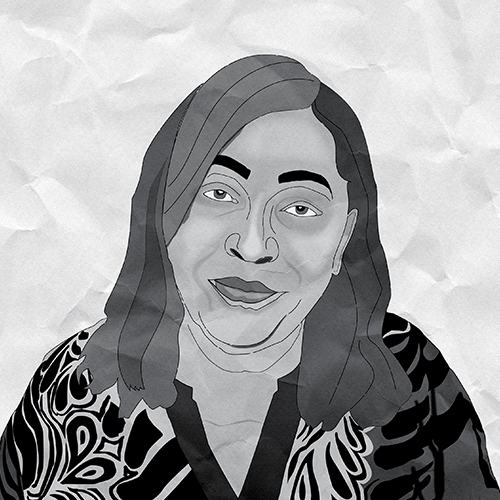
Amb Mona

Amb Mona

Niger

Ethiopia

Yeshi Tadesse

Ethiopia

Congo

Victorine Nze

Congo

Benin

Align Bousary

Benin

Tchad

Karthouma Guembang

Tchad

RDC

Lutaya Kanza

RDC

Gabon

Anne Marie Bouma

Gabon

,

Zone 2 - Our transformation

,

The Transformation from the OAU to AU was officially launched in 2002 with the primary aim of prioritising regional cooperation and integration as well as prioritising sustainable and inclusive economic growth and development.


The African narrative has shifted and Africa’s stakeholders - its citizens - are seeking partnerships with interested stakeholders who share the same if not similar aspirations for a future full of endless possibilities. There is a yearning to collaboratively work with partners to achieve the Vision of Africa’s Agenda 2063.


This Zone will take our visitors through our transformation journey, sharing stories of how we are taking ownership of building the Africa we want.

Zone 3 - Our heritage

Taking you on a journey of the rich and exuberant African culture; showcasing music, film and dance from the contient. profiling young talent, successful women - past and modern heroines, cityscapes and cultural artefacts.

This zone will take visitors through a journey that enhances their auditory experience and assimilate into the boundless traditional sights and sounds of the wondrous African continent.